The Monkey Wrench Gang by Edward Abbey
352 pages
Published 1975
Read from May 28 to May 31
Rating: ★★★½ out of 5
I
prevaricated longer than strictly necessary in adjudging a rating for
this book. My ratings, after all, are almost entirely arbitrary; in the
end, who cares? For The Monkey Wrench Gang, the rating came down
to a debate between the part of me that likes ecoterrorism and the
slickrock Southwest, which wanted to rate it quite highly, and the part
of me that hates certain conventions of 1970s popular fiction, which
wanted to mark it down somewhat.
My least favorite aspect of the
book was Bonnie. The 1970s were an awkward time in the evolution of how
women are depicted in mainstream fiction, and Bonnie fits the slot of
the 1970s New Woman stereotype: contumacious yet concupiscent, "bitchy"
one might say, motivated by a vague rage at the very concept of maleness
yet possessed of a driving desire to nest, popping the pill religiously
yet evaluating every man in her circle as a potential father for her
inevitable offspring. Bonnie receives no characterization beyond that
period-specific archetype, aside from purely cosmetic flourishes (of
Bronx Jewish extraction, thinks of her companions once and only once as goyim
because why the hell not), and her motivations are never quite
elucidated, beyond a generational mood of boredom. I find this archetype
even more annoying than the blank wifey type of 1960s fiction, if only
because 1970s New Women tended to have lots of viewpoint chapters where
male authors fumbled around trying to "figure out the female mind," as
it were.
George Washington Hayduke was something of a
disappointment, as well. I'd heard enough references to him to get the
idea that he was this larger than life character. An 800 mile hiking trail
is named in his honor, for goodness' sake. Maybe in 1975 a former Green
Beret and POW with PTSD was a groundbreaking character, but he just
didn't do it for me. He was pretty much just a canyonlands Rambo. Maybe I
expected something more gonzo. (I expected the book to be funnier and
weirder than it was, in general.) I was far more interested in Seldom
Seen Smith and Doc Sarvis, who naturally enough are given the least
amount of screentime out of the main four.
Embarrassing confession time: Somehow I'd gotten this vague idea over the years that The Monkey Wrench Gang
was a talking animal fable, something along the lines of the animals
all get sick of humankind's assholery and rise up in a Four Corners
ecoterrorist Animal Farm. The famous George Washington Hayduke,
in my imagination, was probably a literal monkey or something, while
Seldom Seen Smith (whom I'd also heard of at some point) was like a
greasy jack-of-all-trades jackrabbit, or whatever. I have no idea where I
got this impression. Maybe at some point I saw a paperback edition that
had a banana on the cover? Since Abbey is noticeably more skilled at
writing about animals and nature than he is at writing fictional people,
who knows -- maybe it would've been a better book if it had been.
Friday, May 31, 2013

Thursday, May 30, 2013
2013 read #67: The Mother Tongue by Bill Bryson.
The Mother Tongue: English & How It Got That Way by Bill Bryson
245 pages
Published 1990
Read from May 29 to May 30
Rating: ★★★★ out of 5
This was a solidly entertaining book in the expected Bryson fashion, but just a little bit underwhelming. It was good, but lacked a certain punchy je ne sais quoi that elevates Bryson's very best work, such as In a Sunburned Country. Partly this underwhelming effect may be due to my coming to this book so late, after absorbing much the same information and humor (or at least halfhearted approximations of the same) from a few dozen Cracked and io9 articles and one or two other books on the peccadilloes of language. Bryson can't be faulted for that. Nonetheless I finished this book feeling there should have been a lot more to it, both in substance and in humor.
245 pages
Published 1990
Read from May 29 to May 30
Rating: ★★★★ out of 5
This was a solidly entertaining book in the expected Bryson fashion, but just a little bit underwhelming. It was good, but lacked a certain punchy je ne sais quoi that elevates Bryson's very best work, such as In a Sunburned Country. Partly this underwhelming effect may be due to my coming to this book so late, after absorbing much the same information and humor (or at least halfhearted approximations of the same) from a few dozen Cracked and io9 articles and one or two other books on the peccadilloes of language. Bryson can't be faulted for that. Nonetheless I finished this book feeling there should have been a lot more to it, both in substance and in humor.
Wednesday, May 29, 2013
2013 read #66: Sapphistries: A Global History of Love Between Women by Leila J. Rupp.
Sapphistries: A Global History of Love Between Women by Leila J. Rupp
236 pages
Published 2009
Read from May 10 to May 29
Rating: ★★½ out of 5
236 pages
Published 2009
Read from May 10 to May 29
Rating: ★★½ out of 5
[2024 edit: I wrote this review early in my own gender and sexuality deconstruction. At that time, I was also a recovering would-be social academic with a data-driven bent. This review is bad. No way around that, and no excuse for it. I’m leaving it up in order to sit with my past ignorance.]
The social sciences are vital, indispensable for a complete picture of human motivations and behavior. Human beings cannot be understood on a purely biological basis, nor should conventional social or religious attitudes be left unquestioned. Many social sciences do not lend themselves to numbers and statistical analyses, so in some cases non-traditional or postmodern approaches may yield insightful and informative contributions to our understanding of human behavior. Unfortunately, postmodern approaches can also lead to a bunch of twaddle and poppycock.
Queer and gender studies, by their avowedly subversive natures, are especially prone to this. Which is doubly unfortunate, as queer and gender studies are essential to establishing the healthy sort of society I would like to live in. The very importance of queer and gender studies makes them ideal for (or perhaps susceptible to) the promulgation and promotion of political causes, such as identity politics. There is also an incredibly self-defeating idea out there that the conceptual framework of science itself is inherently masculine, and that all those oh so "emotional" and "intuitive" women should, instead of claiming science as a gender-neutral pursuit, come up with their own alternative approaches to understanding the world. Which, if you give it a moment's thought, is every bit as limiting and as prejudiced as the actual institutional sexism you would assume we'd all like to be fighting.
That all comes together to dispiriting effect in certain portions of this book. The second chapter is by far the worst offender. It's supposedly a musing or speculation upon the idea of woman-on-woman love in prehistoric times. Given how little real information we have to go on, some carefully contextualized speculation would make for interesting reading. Rupp, however, ignores the possibilities of social science altogether, quoting or inventing "creation stories" to prioritize the female procreative role, and giving credence to the whole "primordial earth goddess and original matriarchal society" myth popularized by second wave feminist identity politics. There quite simply isn't any persuasive evidence of worldwide goddess worship "suppressed" after a "masculist revolution" deep in prehistory. Which is not to say that such events did not occur occasionally throughout the world. But subscribing to the idea of a global goddess religion and subsequent "masculist revolution," while useful to certain factions of feminism, is about as naive as postulating the lost continent of Mu to explain scattered linguistic similarities. Or, for that matter, as naive as postulating that men are a separate, alien species tainted by a "mutant Y chromosome." Speculations are excellent, except when they ignore what evidence we do have. Speculations that simplify the head-spinning diversity of culture and customs over the last 40,000 or so years are no better than wholesale myth-making. In my view, social science should seek to contextualize and controvert myths, not create them. Likewise, quoting modern novels that treat with the subject of woman-on-woman love or all-female societies in prehistory does not tell us anything about the possibilities of the past; it does nothing but reflect our own modern sexual and emotional sensibilities back at us.
This isn't a criticism of Sapphistries so much as of postmodern scholarship in general. Subsequent chapters aren't as egregious, drawing more from historical sources than modern fiction, but even then the "scholarship" can stretch culturally appropriate expressions of friendship into a modern homoerotic reading not likely intended by the original authors. Again, this is a case of augmenting woefully sparse sources, but it's none too convincing. Unless Rupp's thesis is merely to suggest that women cared about other women in the middle ages, in which case, thesis proven.
Sapphistries finally merits something of its "global history" title halfway through, when historical sources become numerous enough to predominate over modern fictionalizations. The book becomes rather engrossing by the time it visits the cabaret culture of Weimar Germany or the jazz clubs of 1920s Harlem. If Sapphistries had confined all the myth-making and literary speculation to a concluding chapter on the ideologies of recent lesbian feminists, and concentrated more on the eras with substantial primary documentation, I would have gotten much more useful knowledge from its pages. Unfortunately, this scintillation of actual scholarship comes as too little, too late.
The social sciences are vital, indispensable for a complete picture of human motivations and behavior. Human beings cannot be understood on a purely biological basis, nor should conventional social or religious attitudes be left unquestioned. Many social sciences do not lend themselves to numbers and statistical analyses, so in some cases non-traditional or postmodern approaches may yield insightful and informative contributions to our understanding of human behavior. Unfortunately, postmodern approaches can also lead to a bunch of twaddle and poppycock.
Queer and gender studies, by their avowedly subversive natures, are especially prone to this. Which is doubly unfortunate, as queer and gender studies are essential to establishing the healthy sort of society I would like to live in. The very importance of queer and gender studies makes them ideal for (or perhaps susceptible to) the promulgation and promotion of political causes, such as identity politics. There is also an incredibly self-defeating idea out there that the conceptual framework of science itself is inherently masculine, and that all those oh so "emotional" and "intuitive" women should, instead of claiming science as a gender-neutral pursuit, come up with their own alternative approaches to understanding the world. Which, if you give it a moment's thought, is every bit as limiting and as prejudiced as the actual institutional sexism you would assume we'd all like to be fighting.
That all comes together to dispiriting effect in certain portions of this book. The second chapter is by far the worst offender. It's supposedly a musing or speculation upon the idea of woman-on-woman love in prehistoric times. Given how little real information we have to go on, some carefully contextualized speculation would make for interesting reading. Rupp, however, ignores the possibilities of social science altogether, quoting or inventing "creation stories" to prioritize the female procreative role, and giving credence to the whole "primordial earth goddess and original matriarchal society" myth popularized by second wave feminist identity politics. There quite simply isn't any persuasive evidence of worldwide goddess worship "suppressed" after a "masculist revolution" deep in prehistory. Which is not to say that such events did not occur occasionally throughout the world. But subscribing to the idea of a global goddess religion and subsequent "masculist revolution," while useful to certain factions of feminism, is about as naive as postulating the lost continent of Mu to explain scattered linguistic similarities. Or, for that matter, as naive as postulating that men are a separate, alien species tainted by a "mutant Y chromosome." Speculations are excellent, except when they ignore what evidence we do have. Speculations that simplify the head-spinning diversity of culture and customs over the last 40,000 or so years are no better than wholesale myth-making. In my view, social science should seek to contextualize and controvert myths, not create them. Likewise, quoting modern novels that treat with the subject of woman-on-woman love or all-female societies in prehistory does not tell us anything about the possibilities of the past; it does nothing but reflect our own modern sexual and emotional sensibilities back at us.
This isn't a criticism of Sapphistries so much as of postmodern scholarship in general. Subsequent chapters aren't as egregious, drawing more from historical sources than modern fiction, but even then the "scholarship" can stretch culturally appropriate expressions of friendship into a modern homoerotic reading not likely intended by the original authors. Again, this is a case of augmenting woefully sparse sources, but it's none too convincing. Unless Rupp's thesis is merely to suggest that women cared about other women in the middle ages, in which case, thesis proven.
Sapphistries finally merits something of its "global history" title halfway through, when historical sources become numerous enough to predominate over modern fictionalizations. The book becomes rather engrossing by the time it visits the cabaret culture of Weimar Germany or the jazz clubs of 1920s Harlem. If Sapphistries had confined all the myth-making and literary speculation to a concluding chapter on the ideologies of recent lesbian feminists, and concentrated more on the eras with substantial primary documentation, I would have gotten much more useful knowledge from its pages. Unfortunately, this scintillation of actual scholarship comes as too little, too late.
Monday, May 27, 2013
2013 read #65: Amberlight by Sylvia Kelso.
Amberlight by Sylvia Kelso
220 pages
Published 2007
Read from May 18 to May 27
Rating: ★★ out of 5
First impression of Amberlight, prose related. Odd syntax one reads, object subject verb, foreign rhythm. Else verb absent enirely. Subject, sometimes. Sensory images, the gleam of light on stone, slap of water. Comma-stepped, pace hard to get into. Stuttery. My own teenage experiments in "sophisticated" prose to mind come often. At least trying, this Kelso, akin to conventional pedestrian fantasy prose not at all. Though Yoda pleased would be.
I exaggerate a little. Occasional English-standard constructions obtrude from the quivering larval mass of jerky cadence, though verb choice often ungraceful, malapropos. Distracting. Fragmentary sentences.
Plot formulaic, fantasy romance. Characters underdeveloped. Emotional investment nil. Predictable. Not the worst book, this year. The Cloud Roads gets that honor, dubious. Waste of time, however. Couldn't get into it. Not at all. Forever took to read. Done with it, glad to be.
220 pages
Published 2007
Read from May 18 to May 27
Rating: ★★ out of 5
First impression of Amberlight, prose related. Odd syntax one reads, object subject verb, foreign rhythm. Else verb absent enirely. Subject, sometimes. Sensory images, the gleam of light on stone, slap of water. Comma-stepped, pace hard to get into. Stuttery. My own teenage experiments in "sophisticated" prose to mind come often. At least trying, this Kelso, akin to conventional pedestrian fantasy prose not at all. Though Yoda pleased would be.
I exaggerate a little. Occasional English-standard constructions obtrude from the quivering larval mass of jerky cadence, though verb choice often ungraceful, malapropos. Distracting. Fragmentary sentences.
Plot formulaic, fantasy romance. Characters underdeveloped. Emotional investment nil. Predictable. Not the worst book, this year. The Cloud Roads gets that honor, dubious. Waste of time, however. Couldn't get into it. Not at all. Forever took to read. Done with it, glad to be.
2013 read #64: Big History by Cynthia Stokes Brown.
Big History: From the Big Bang to the Present by Cynthia Stokes Brown
254 pages
Published 2007
Read from May 24 to May 27
Rating: ★★ out of 5
Big history -- the school of thought advocating a holistic, broad-scope view of history from the beginning of time on through geological history and into the present -- fits perfectly with my sensibilities. I didn't know "big history" was an acknowledged methodology until sometime this year, yet in a way it's been the central principle of my personal worldview as long as I can remember. The closest I can get to a "religious" or "spiritual" feeling is the humbling yet awesome sense of the vast depths of time, the huge processes of geology and biology and human history (which, after all, is only the subjective experience of one species produced and influenced by biology and Earth's systems) operating on a barely conceivable scale.
Big History the book, as my first introduction to the academic version of this concept, is really disappointing. The book is riddled with glaring factual errors; the most egregious comes when Stokes Brown gives a quick sketch of the solar system and turns Saturn's axis on its side, confusing it with Uranus, something no 9 year old would mistake. Her descriptions of evolution are almost equally cringe-worthy. "African descendents of Homo erectus," she writes, "mutated one more time into a fitter species, Homo sapiens." There are a lot of things wrong with that statement, involving terminology and "ladder of life" implications at the very least, but I'll leave that to you to parse out as a fun exercise. The rest of her overview of hominid evolution is almost as bad, though I don't know whether that results more from outdated information (our understanding of human evolution has changed rapidly with new discoveries and new information since this book was published) or from further misapprehension.
One risk inherent in the big history approach is the possibility of losing necessary detail in the big picture. Big History is often guilty of that, glossing over complicated historical questions and providing me, personally, with practically no new insights or information. To me, it reads like a freshman syllabus would read to a graduating senior. It reminds me of those lightweight courses I took to burn up credits my final undergraduate semester, where I barely had to show up in order to ace the class. I'm sure such a shallow reading would be of some value to somebody, perhaps someone with the bare minimum of historical knowledge, but the blatant factual errors and overly simplistic narrative make Big History unsuitable for even such a humble task.
254 pages
Published 2007
Read from May 24 to May 27
Rating: ★★ out of 5
Big history -- the school of thought advocating a holistic, broad-scope view of history from the beginning of time on through geological history and into the present -- fits perfectly with my sensibilities. I didn't know "big history" was an acknowledged methodology until sometime this year, yet in a way it's been the central principle of my personal worldview as long as I can remember. The closest I can get to a "religious" or "spiritual" feeling is the humbling yet awesome sense of the vast depths of time, the huge processes of geology and biology and human history (which, after all, is only the subjective experience of one species produced and influenced by biology and Earth's systems) operating on a barely conceivable scale.
Big History the book, as my first introduction to the academic version of this concept, is really disappointing. The book is riddled with glaring factual errors; the most egregious comes when Stokes Brown gives a quick sketch of the solar system and turns Saturn's axis on its side, confusing it with Uranus, something no 9 year old would mistake. Her descriptions of evolution are almost equally cringe-worthy. "African descendents of Homo erectus," she writes, "mutated one more time into a fitter species, Homo sapiens." There are a lot of things wrong with that statement, involving terminology and "ladder of life" implications at the very least, but I'll leave that to you to parse out as a fun exercise. The rest of her overview of hominid evolution is almost as bad, though I don't know whether that results more from outdated information (our understanding of human evolution has changed rapidly with new discoveries and new information since this book was published) or from further misapprehension.
One risk inherent in the big history approach is the possibility of losing necessary detail in the big picture. Big History is often guilty of that, glossing over complicated historical questions and providing me, personally, with practically no new insights or information. To me, it reads like a freshman syllabus would read to a graduating senior. It reminds me of those lightweight courses I took to burn up credits my final undergraduate semester, where I barely had to show up in order to ace the class. I'm sure such a shallow reading would be of some value to somebody, perhaps someone with the bare minimum of historical knowledge, but the blatant factual errors and overly simplistic narrative make Big History unsuitable for even such a humble task.
Friday, May 17, 2013
2013 read #63: Grass by Sheri S. Tepper.
Grass by Sheri S. Tepper
426 pages
Published 1989
Read from May 11 to May 17
Rating: ★★★ out of 5
Way back in January, when I read and reviewed The Summer Tree by Guy Gavriel Kay, I happened to find and bookmark this list of 1980s science fiction novels. I intended to go through the list somewhat systematically (contemporaneously with the 100+ books on my recommended list and the 100+ books I own but haven't read, two more lists I plan to go through somewhat systematically). Systematic procedures be damned, though -- I added Grass to my immediate to-read list because the Wiki entry made it sound fairly interesting.
Before reading this, I'm not sure what my expectations are. I have a fondness for 1980s sci-fi novels, it's true, but every decade, no matter what its literary fashions, produces far more dreck than gold. And while Grass was nominated for a Hugo and Locus Award, it won neither, and my impression of Tepper is colored by The Fresco, a forgettable novel I never even managed to complete way back in the early 2000s. Almost anything and anyone can get nominated for awards, I've learned; a Hugo nomination means almost nothing.
After reading this... well, that was a missed opportunity.
For the first third or so of Grass, I was stoked. An intriguing world, potentially interesting characters, subplots that complicated the main storylines quite pleasingly. I don't like single-biome worlds in my science fiction, but I was willing to overlook that because it gave us the race of the Hippae: sadistic alien assholes that sound like a cross between demon-horses and Huayangosaurus, and (inevitably -- this book was written in the 1980s) holding powers of psycho-erotic control over their human "riders." I was going to fill this review with a discussion of the obvious sci-fi version of Mormonism, with its genetic repository and computer recreation of the DNA of every human that ever lived (a Trenchant Social Metaphor, or merely something Tepper thought was a neat concept?), as well as premature comparisons to Hyperion, another, much better novel about the people who seek answers to vital, galactic-scale questions on a beautiful and perilous colony world. But then, by the middle section, it all became muddled and melodramatic, dithering along with soap opera plots and ever-increasing numbers of ever-less-developed viewpoint characters that only exist to give the main plot a nudge. The initial promise was entirely squandered, leaving the rest of the book something of a chore to get through. I get that personal conflicts and flawed personalities will surface even when The Fate of the Human Race is at stake -- in fact I prefer personal stories in my genre fiction -- but "emotionally domineering husband and emotionally unavailable wife just don't understand each other" is some gender-bound Lifetime Channel bullshit, boring and unrelatable, especially when they're literally only together because their religion says divorce is a sin, which (to my ever-judgmental eyes) just makes them look stupid and irrational. Well, even more stupid and irrational than two people operating under gender stereotypes already are.
The rising action is weighed down and cluttered up with all those extra viewpoints and side plots that go basically nowhere. I mean, I'm pretty sure Marjorie could have had her climactic, silly meeting with God (and its oh-so-thematic revelation of how intelligent creatures must work out morality for themselves) without some doofy D-level goons from the Sci-Fi Mormon monastery showing up hoping for a thrill-kill. I'm dead certain the overall story did not benefit from the cliched "my deformity made me evil" guy, who felt like a weird leftover from a far inferior draft. I'd say at least a hundred pages could have been edited out of existence with no thematic or emotional loss to the story. So not even scenes like the central family and their friends gearing up their horses like futuristic jousters, complete with laser-tipped lances and lightweight flank armor, to do battle with the demon-horse-dinosaurs -- seriously one of the most metal scenes I've read all year -- could entirely salvage Grass in my estimation. The coda was satisfying, but too little, too late.
Overall I'd call this one an ambitious trainwreck. Totally worth the read for the occasional awesome bits, just don't expect a lost classic.
426 pages
Published 1989
Read from May 11 to May 17
Rating: ★★★ out of 5
Way back in January, when I read and reviewed The Summer Tree by Guy Gavriel Kay, I happened to find and bookmark this list of 1980s science fiction novels. I intended to go through the list somewhat systematically (contemporaneously with the 100+ books on my recommended list and the 100+ books I own but haven't read, two more lists I plan to go through somewhat systematically). Systematic procedures be damned, though -- I added Grass to my immediate to-read list because the Wiki entry made it sound fairly interesting.
Before reading this, I'm not sure what my expectations are. I have a fondness for 1980s sci-fi novels, it's true, but every decade, no matter what its literary fashions, produces far more dreck than gold. And while Grass was nominated for a Hugo and Locus Award, it won neither, and my impression of Tepper is colored by The Fresco, a forgettable novel I never even managed to complete way back in the early 2000s. Almost anything and anyone can get nominated for awards, I've learned; a Hugo nomination means almost nothing.
After reading this... well, that was a missed opportunity.
For the first third or so of Grass, I was stoked. An intriguing world, potentially interesting characters, subplots that complicated the main storylines quite pleasingly. I don't like single-biome worlds in my science fiction, but I was willing to overlook that because it gave us the race of the Hippae: sadistic alien assholes that sound like a cross between demon-horses and Huayangosaurus, and (inevitably -- this book was written in the 1980s) holding powers of psycho-erotic control over their human "riders." I was going to fill this review with a discussion of the obvious sci-fi version of Mormonism, with its genetic repository and computer recreation of the DNA of every human that ever lived (a Trenchant Social Metaphor, or merely something Tepper thought was a neat concept?), as well as premature comparisons to Hyperion, another, much better novel about the people who seek answers to vital, galactic-scale questions on a beautiful and perilous colony world. But then, by the middle section, it all became muddled and melodramatic, dithering along with soap opera plots and ever-increasing numbers of ever-less-developed viewpoint characters that only exist to give the main plot a nudge. The initial promise was entirely squandered, leaving the rest of the book something of a chore to get through. I get that personal conflicts and flawed personalities will surface even when The Fate of the Human Race is at stake -- in fact I prefer personal stories in my genre fiction -- but "emotionally domineering husband and emotionally unavailable wife just don't understand each other" is some gender-bound Lifetime Channel bullshit, boring and unrelatable, especially when they're literally only together because their religion says divorce is a sin, which (to my ever-judgmental eyes) just makes them look stupid and irrational. Well, even more stupid and irrational than two people operating under gender stereotypes already are.
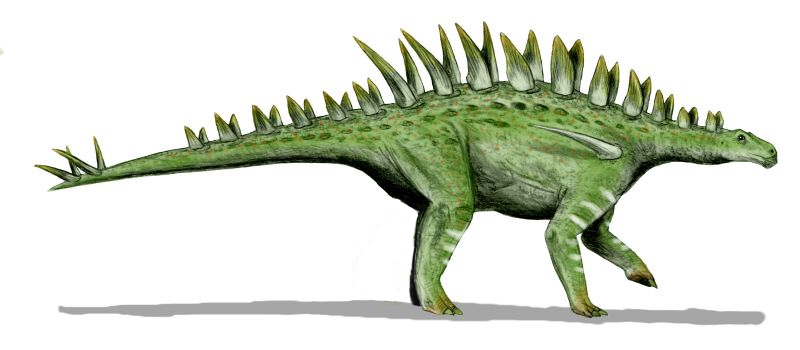
The rising action is weighed down and cluttered up with all those extra viewpoints and side plots that go basically nowhere. I mean, I'm pretty sure Marjorie could have had her climactic, silly meeting with God (and its oh-so-thematic revelation of how intelligent creatures must work out morality for themselves) without some doofy D-level goons from the Sci-Fi Mormon monastery showing up hoping for a thrill-kill. I'm dead certain the overall story did not benefit from the cliched "my deformity made me evil" guy, who felt like a weird leftover from a far inferior draft. I'd say at least a hundred pages could have been edited out of existence with no thematic or emotional loss to the story. So not even scenes like the central family and their friends gearing up their horses like futuristic jousters, complete with laser-tipped lances and lightweight flank armor, to do battle with the demon-horse-dinosaurs -- seriously one of the most metal scenes I've read all year -- could entirely salvage Grass in my estimation. The coda was satisfying, but too little, too late.
Overall I'd call this one an ambitious trainwreck. Totally worth the read for the occasional awesome bits, just don't expect a lost classic.
Saturday, May 11, 2013
2013 read #62: Desert Solitaire by Edward Abbey.
Desert Solitaire: A Season in the Wilderness by Edward Abbey
273 pages
Published 1968
Read from May 9 to May 11
Rating: ★★★★½ out of 5
Of all the authors I somehow hadn't read until this year, Edward Abbey is perhaps the most surprising omission. I've known of (and intended to absorb) his works for many years, probably since I was a teenager. Now that I've had my first exposure to him, it makes me marvel all the more that I'd skipped his works until now. If Jack Kerouac reminds me of how my brother thought of himself, Abbey reminds me of me, or at least of my ideal conception of myself: a loner, self-sufficient, adventurous and maybe a little reckless, with a deep, essentially worshipful appreciation for ecology and the esthetics of real life out there beyond the end of the road, a profound distaste for authority and conventionality, a predilection for small acts of eco-sabotage, a misanthrope with an appreciation of true scale and perspective, none of that petty fixation on cheap drugs, cheap thrills, and superficial philosophy that so consumed Kerouac. You can keep your Beat poets; teenage Rick finally has a literary role-model and archetype, only fifteen or so years too late.
It doesn't hurt that this book explores then remote, now heartbreakingly overdeveloped corners of southeast Utah. I've been to some amazing places -- the North Cascades, the Oregon Coast, the Sierra Nevada, Mexico's Sierra Madre Occidental, the northern shore of Lake Superior, the west coast of Ireland -- but if I had to choose one and only one region to return to, it would be the redrock country of southeast Utah. If it weren't for the people who live there, I'd drop everything to move to a drafty one room shack in the Utah desert almost without hesitation. Even the names are geologic poetry to me, invoking memories of my own experiences as well as the vastness of deep time: Yellowcat, Poison Strip, Morrison, the Book Cliffs, the La Sals, the Henrys.
The life of the 1960s park ranger -- particularly the backcountry ranger, far away from the press of the "industrial tourist" -- has long struck me as the epitome of a romantic existence, its glamor unmatched except perhaps by 1970s thru-hikers with their giant external frame packs and breezy short-shorts and giant beards, or river rafting guides from the same period. (The only modern career that might come close would be backcountry archaeologist attached to a remote national forest, but even then there's too much actual work and supervision. If only volunteer field paleontologist could be a permanent, feasible career.) Reading Abbey's impressions of a still largely unspoiled Arches (years before Desert Solitaire helped make it such a popular destination) was at times heartbreaking, as I contrasted his dusty solitude with my own memories of glass visitor centers, blacktop highways, and crowded viewpoints. Far more devastating, however, was the chapter (the longest in the book, but still far too short) detailing his rafting trip down Glen Canyon before the completion of the eponymous dam. The thought of what's buried under all that brackish water and mucky silt and garbage tossed from speedboats... it makes me angry, it makes me hateful, and it makes me feel ill.
Even though I'm far from an idealistic teenager nowadays, I can't understand anyone who would feel any other way.
273 pages
Published 1968
Read from May 9 to May 11
Rating: ★★★★½ out of 5
Of all the authors I somehow hadn't read until this year, Edward Abbey is perhaps the most surprising omission. I've known of (and intended to absorb) his works for many years, probably since I was a teenager. Now that I've had my first exposure to him, it makes me marvel all the more that I'd skipped his works until now. If Jack Kerouac reminds me of how my brother thought of himself, Abbey reminds me of me, or at least of my ideal conception of myself: a loner, self-sufficient, adventurous and maybe a little reckless, with a deep, essentially worshipful appreciation for ecology and the esthetics of real life out there beyond the end of the road, a profound distaste for authority and conventionality, a predilection for small acts of eco-sabotage, a misanthrope with an appreciation of true scale and perspective, none of that petty fixation on cheap drugs, cheap thrills, and superficial philosophy that so consumed Kerouac. You can keep your Beat poets; teenage Rick finally has a literary role-model and archetype, only fifteen or so years too late.
It doesn't hurt that this book explores then remote, now heartbreakingly overdeveloped corners of southeast Utah. I've been to some amazing places -- the North Cascades, the Oregon Coast, the Sierra Nevada, Mexico's Sierra Madre Occidental, the northern shore of Lake Superior, the west coast of Ireland -- but if I had to choose one and only one region to return to, it would be the redrock country of southeast Utah. If it weren't for the people who live there, I'd drop everything to move to a drafty one room shack in the Utah desert almost without hesitation. Even the names are geologic poetry to me, invoking memories of my own experiences as well as the vastness of deep time: Yellowcat, Poison Strip, Morrison, the Book Cliffs, the La Sals, the Henrys.
The life of the 1960s park ranger -- particularly the backcountry ranger, far away from the press of the "industrial tourist" -- has long struck me as the epitome of a romantic existence, its glamor unmatched except perhaps by 1970s thru-hikers with their giant external frame packs and breezy short-shorts and giant beards, or river rafting guides from the same period. (The only modern career that might come close would be backcountry archaeologist attached to a remote national forest, but even then there's too much actual work and supervision. If only volunteer field paleontologist could be a permanent, feasible career.) Reading Abbey's impressions of a still largely unspoiled Arches (years before Desert Solitaire helped make it such a popular destination) was at times heartbreaking, as I contrasted his dusty solitude with my own memories of glass visitor centers, blacktop highways, and crowded viewpoints. Far more devastating, however, was the chapter (the longest in the book, but still far too short) detailing his rafting trip down Glen Canyon before the completion of the eponymous dam. The thought of what's buried under all that brackish water and mucky silt and garbage tossed from speedboats... it makes me angry, it makes me hateful, and it makes me feel ill.
Even though I'm far from an idealistic teenager nowadays, I can't understand anyone who would feel any other way.
Subscribe to:
Posts (Atom)